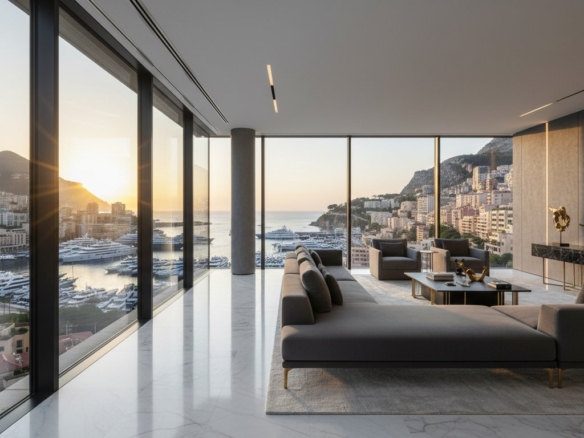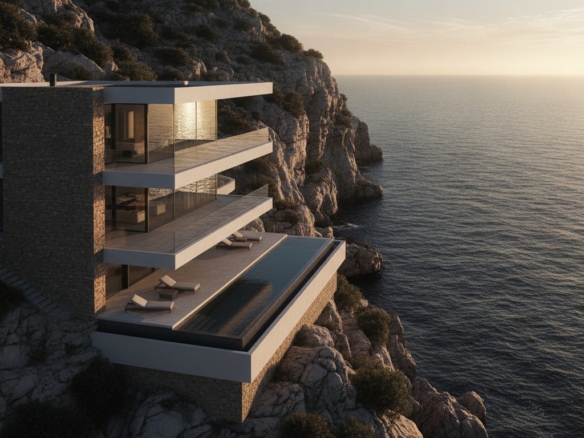


For anyone with a serious eye on European property, France offers a landscape of genuine opportunity and long-term value. Key regions like the Côte d’Azur and Provence never lose their lustre, but the current market dynamics are creating some unique windows for buyers. Finding the right villas to buy in France means looking past the headlines and understanding the recent shifts on the ground.
Decoding the French Villa Market for Investors
For savvy international investors and high-net-worth buyers, French property isn’t just an asset class; it’s a legacy investment known for its stability and timeless appeal. But if you look closer, you’ll see the market is in a phase of recalibration, which for smart money, is the perfect time to make a move.
Recent market data paints a picture of a sector that, while tested, is already showing clear signs of a comeback. Last year saw a notable slowdown, with property transactions dropping by 17% to around 780,000 as interest rates rose and economic pressures mounted. That adjustment period, however, seems to be giving way to fresh optimism.
In fact, the first half of this year marked a significant turnaround, with transaction volumes climbing 12% compared to the same period last year. This resurgence, detailed in recent market analysis, is largely down to stabilising interest rates and some helpful tax incentives reigniting buyer confidence. UK investors, who have always been a cornerstone of the market, are taking notice. You can explore the full French property market analysis to understand the recovery trends.
This shift is creating a favourable environment for anyone looking to purchase villas to buy in France. It’s not just a recovery; it’s a strategic moment to enter the market.
Interpreting the Current Market Climate

Getting to grips with the subtleties of the market is crucial. The recent stabilisation of interest rates has peeled away a thick layer of uncertainty that held many buyers back. This new predictability makes financial planning much more straightforward and encourages the kind of long-term commitments that define luxury property investment.
On top of that, the French government’s approach to tax incentives has been a real catalyst for demand. These measures are specifically designed to make property acquisition more appealing, offering tangible benefits for overseas buyers. Put it all together, and you have a compelling case for getting into the market now, before the recovery fully kicks in and competition heats up.
“The long-term resilience of the French property market is a key factor for discerning buyers,” notes Nick Marr, founder of EuropeanProperty.com. “Periods of adjustment often create the best opportunities for securing premium assets with significant upside potential.”
Key Factors for Villa Investors
If you’re targeting high-end villas to buy in France, a few key indicators should shape your strategy. It’s vital to remember that France isn’t one single market; performance varies dramatically from one region to another. While the prime spots have proven incredibly resilient, other areas are now offering much more attractive pricing.
Here are a few critical things to keep an eye on:
- Regional Price Adjustments: Some areas have seen bigger price corrections than others. For a well-prepared buyer, this means more room to negotiate.
- Inventory Levels: In certain locales, there’s been an uptick in the number of high-end properties available. This gives you more choice and a better chance of finding a truly unique asset.
- Long-Term Growth Fundamentals: Always zero in on regions with solid economic foundations, great infrastructure, and a proven history of attracting international buyers.
Before diving deeper, let’s summarise the key market drivers that should be on every investor’s radar.
Key French Property Market Indicators for Investors
This table provides a snapshot of the critical factors shaping the investment landscape for French villas. It’s a quick reference to help guide your strategic decision-making.
| Market Factor | Current Status & Investor Implication |
|---|---|
| Interest Rate Stability | Rates have stabilised after a period of volatility, restoring buyer confidence and making financing more predictable for long-term investments. |
| Transaction Volume Growth | A 12% increase in the first half of the year signals a market rebound. Acting now could secure better pricing before competition intensifies. |
| Regional Price Variations | Prime markets like the Côte d’Azur remain resilient, while other regions offer significant value and negotiating power due to price corrections. |
| Government Incentives | Favourable tax measures are actively stimulating demand, creating tangible financial benefits, especially for overseas buyers. |
| Inventory in Key Areas | An increase in available high-end properties in certain locations means more choice and the potential to acquire unique villas at good value. |
By analysing these factors, investors can pinpoint exactly where the most promising opportunities are hiding and turn market intelligence into a real acquisition strategy. The signals are clear: for those who are informed and ready, now is the time to act with confidence.
Navigating The French Villa Purchase Process
Buying one of the premier villas in France isn’t just a simple transaction; it’s more like a well-choreographed legal ballet. For international buyers, understanding these steps is the key to a smooth and secure purchase. The whole process is built on precision and overseen by a unique legal figure, the Notaire, who ensures everything is done by the book.
This journey turns what could be a daunting legal maze into a clear, manageable path. It all starts with your offer and ends with you holding the keys, with crucial safeguards built in to protect you along the way.
The Initial Offer And The Compromis de Vente
Once you’ve found the French villa you can’t live without, the first official step is making a written offer, known as the offre d’achat. If the seller accepts, you have a preliminary agreement. But the real milestone is signing the Compromis de Vente.
This isn’t just a simple handshake agreement. It’s a legally binding preliminary contract that locks in both you and the seller. It lays out every single detail of the sale: the price, a full description of the property, and any special conditions. At this point, you’ll typically pay a deposit of 5-10% of the purchase price, which is held safely in escrow by the Notaire.
Think of the Compromis de Vente as the foundation of your purchase. For a deeper dive, our comprehensive guide can help you buy a villa in France with confidence.
The Crucial Role Of The Notaire
Unlike the UK system, where buyers and sellers have their own solicitors going back and forth, the French process revolves around the Notaire. This is a state-appointed legal official who acts as an impartial representative for everyone involved—you, the seller, and the state itself. Their job is to guarantee the entire transaction is legal and fair.
The Notaire‘s duties include:
- Drafting Contracts: Preparing both the initial Compromis de Vente and the final deed, the Acte de Vente.
- Due Diligence: Carrying out all the essential legal checks, like title searches, planning permissions, and land registry verification.
- Managing Finances: Holding your deposit in a secure account and handling the final transfer of funds.
- Registering the Deed: Making sure the property is correctly registered in your name once the sale is complete.
This kind of scenery is exactly what draws so many people to find their dream villas in places like Provence.
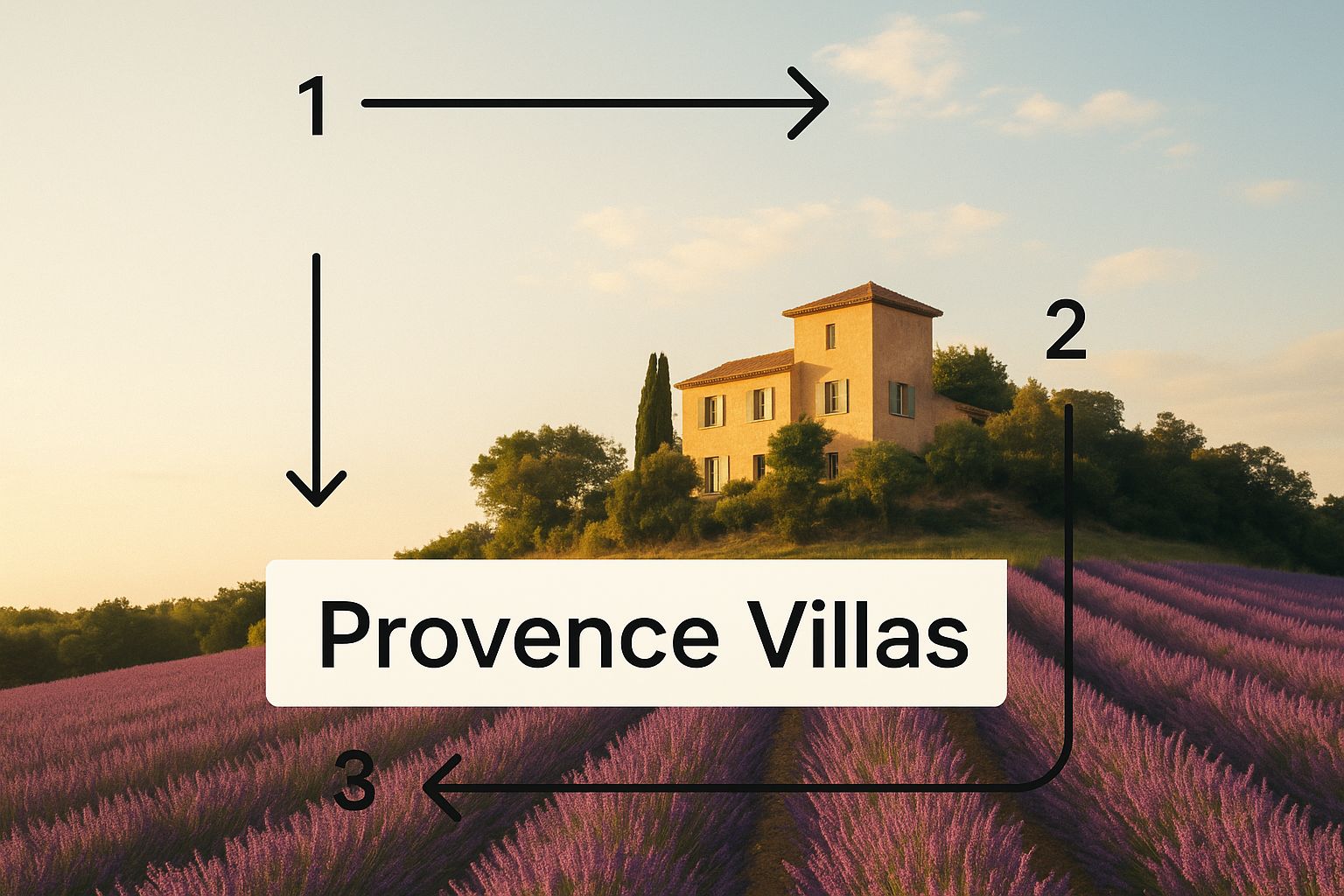
The image perfectly captures the lifestyle that investors are buying into—a blend of stunning natural beauty and elegant homeownership.
Essential Safeguards For The Buyer
The French system is packed with protections for buyers, which is especially reassuring if you’re coming from overseas. The two most important are the cooling-off period and the conditional clauses, which give you both security and a way out if things don’t go to plan.
The French property purchase process is designed with consumer protection at its core. The 10-day cooling-off period and the use of ‘clauses suspensives’ give international buyers a level of security that is quite unique in European real estate.
This legal framework is there to take the risk out of the process for you.
The 10-Day Cooling-Off Period
As soon as the fully signed Compromis de Vente is delivered to you, a mandatory 10-day cooling-off period (délai de rétractation) officially begins. During these ten days, you can pull out of the purchase for any reason at all, with no questions asked and no penalty. Your deposit will be returned in full. It’s a vital safety net, giving you one last chance to reflect before you’re fully committed.
Conditional Clauses or ‘Clauses Suspensives’
These are specific conditions written directly into the Compromis de Vente that have to be met for the sale to go through. They are an incredibly powerful tool for protecting your interests. Some common examples include:
- Securing Finance: This is the most common one. It makes the sale conditional on you getting a mortgage offer within a set period.
- Planning Permission: If you’re planning to build an extension or a pool, you can make the sale dependent on getting the necessary permits.
- Satisfactory Surveys: The sale can be conditional on the results of a structural survey, ensuring there are no nasty surprises.
If any of these conditions aren’t met (and it’s not your fault), you can legally walk away from the contract and get your full deposit back.
Finalising The Purchase With The Acte de Vente
Once all the conditions in the Compromis de Vente have been met and the Notaire has finished all the legal checks—a process that usually takes two to three months—it’s time for the final step: signing the Acte de Vente.
This is the final deed of sale, and it’s signed in the Notaire‘s office. At this meeting, you transfer the remaining balance of the purchase price, and just like that, you officially become the new owner of the villa. The Notaire then registers the deed with the French Land Registry, bringing a secure, clear, and reassuring process to a close.
Exploring Prime Regions for Luxury Villa Investments
France’s appeal isn’t a one-size-fits-all affair; it’s a tapestry of wildly different lifestyles, landscapes, and architectural traditions. So, when it comes to choosing where to buy your villa, the real question isn’t about finding the “best” region. It’s about finding the one that perfectly matches your personal and financial ambitions.
After all, the ideal spot for a sun-drenched seasonal escape is a world away from a high-yield rental powerhouse or a secluded family estate.
This is your guide to the most coveted locations for luxury villa investments. We’ll move from the timeless glamour of the French Riviera to the rustic soul of Provence, breaking down the unique market dynamics, property styles, and lifestyle on offer in each destination. The goal is to give you the clarity needed to make a strategic and deeply personal choice.
The Timeless Côte d’Azur
Let’s be honest—the French Riviera is still the undisputed heart of European luxury and glamour. For anyone considering villas to buy in France, this sliver of coastline offers an intoxicating mix of brand prestige, rock-solid rental demand, and a lifestyle that screams sophistication. Places like Saint-Tropez, Cannes, and Cap Ferrat aren’t just locations; they are global benchmarks for high-end real estate.
Villas here are often stunning contemporary masterpieces with sweeping sea views or historic Belle Époque estates dripping with character. The market is defined by its sheer resilience and unwavering international appeal, consistently drawing in a global elite. Yes, the price tags are among the highest in France, but the potential for capital growth and phenomenal rental income—especially during high season and major events like the Cannes Film Festival—is simply exceptional.
Rustic Elegance in Provence
Head inland from the coast, and you’ll find Provence, a region offering a completely different but equally captivating vision of French life. This is for those who crave rustic charm, absolute privacy, and a genuine connection to the land. The landscape of lavender fields, ancient olive groves, and medieval hilltop villages is the perfect backdrop for its iconic properties.
Here, the quintessential luxury villa is often a lovingly restored mas (farmhouse) or a grand bastide (country manor), blending centuries of history with every modern comfort you could wish for. The market in hotspots like the Luberon and the Alpilles attracts buyers chasing tranquillity and a slower, more deliberate pace of life, without ever sacrificing refinement. Provence offers fantastic value compared to the Riviera, and its villas are magnets on the seasonal rental market, appealing to families and groups looking for that idyllic escape.
The Prestigious Vineyards of Bordeaux
For the oenophile investor, the Bordeaux region presents a unique opportunity to merge a passion for wine with a seriously sound property investment. Look beyond the elegant city of Bordeaux, and the surrounding countryside is dotted with magnificent châteaux and handsome manor houses, many with their own small, private vineyards.
Investing here is about more than just bricks and mortar; it’s about acquiring a piece of world-renowned terroir. The market is stable, buoyed by the region’s global reputation for wine production. A villa in Saint-Émilion or the Médoc offers a lifestyle steeped in gastronomy and viticulture. These properties not only hold their value incredibly well but also have a powerful appeal for a niche, high-end rental audience seeking a truly immersive wine country experience.
Coastal Charm in Brittany
Often overlooked by international buyers fixated on the Mediterranean, Brittany’s rugged coastline and proud Celtic heritage offer a distinct and compelling alternative. Its dramatic cliffs, hidden sandy coves, and postcard-perfect fishing villages appeal to those who appreciate a wilder, more authentic coastal vibe.
Luxury villas to buy in France in this region often come in the form of stone-built manors (manoirs) or sleek contemporary homes designed to maximise those incredible ocean views. The market here is far more accessible than in the south, offering significant value for money. Brittany is a huge domestic holiday destination, which guarantees a reliable rental market, particularly for properties right on the water. It’s an ideal choice for investors seeking a unique lifestyle asset, far from the crowded southern hotspots.
Recent analysis shows some clear patterns among international buyers, especially those from the UK. While American interest has surged, British buyers remain a steady, influential force, drawn to France’s stable pricing and strategic benefits. UK purchasers often favour regions like Brittany and Normandy alongside the sunnier southern locales, with decisions increasingly shaped by climate and lifestyle. Even in Paris, the market for quality urban villas remains strong among non-resident buyers.
One key trend is a clear preference for existing properties over new builds, partly due to supply issues caused by stricter environmental regulations. Crucially, energy performance has become a major factor. Energy-efficient homes now command higher prices, aligning perfectly with modern investment priorities. To get a better grasp of these trends, you can read more about the French property market outlook and buyer behaviour.
Ultimately, the best region for your investment depends entirely on your vision.
“France offers an incredible diversity of luxury markets,” says Nick Marr, founder of EuropeanProperty.com. “The key is to match the region’s character to your investment thesis—whether that’s the high-octane glamour of the Riviera or the understated elegance of a Provençal estate.”
Uncovering Strategic Opportunities on the French Riviera
While the French property market as a whole is finding its feet again, the ultra-luxury end of the French Riviera is telling a very different story. And for shrewd investors, it’s a story that signals a rare opportunity. This legendary coastline, usually known for its sky-high prices and fierce competition, has quietly shifted into a buyer’s market, opening up some very interesting doors for those poised to act.
This isn’t a sign that the Côte d’Azur has lost its shine. Far from it. What we’re seeing is a temporary recalibration, a perfect storm of global economic headwinds, higher borrowing costs, and new French taxes on second homes that have taken some of the heat out of the very top of the market. This creates a window to acquire exceptional villas to buy in France on better terms than we’ve seen in years.
A Buyer’s Market Emerges
The mood on the Côte d’Azur right now is one of more choice and less frantic competition, especially for the grandest estates. A noticeable number of properties, particularly some formerly owned by Russian individuals, have come onto the market, tipping the classic supply-and-demand scales firmly in the buyer’s favour.
This has shifted the negotiating power dramatically. Recent reports are all pointing to this trend, with some experts even forecasting potential price drops of up to 37% by year-end compared to the market’s recent peak. For international and UK buyers, this is an extraordinary chance to pick up a prime asset at a significant discount. You can read more about the market forecasts for the French Riviera.
Identifying Prime Acquisition Targets
The biggest price adjustments are happening at the very top. Villas priced above €3 million are feeling this shift the most, particularly sprawling estates over 1,000 m² or those with multiple buildings on the grounds. These are the properties that are sitting on the market a little longer, making their owners far more open to a serious conversation.
The real opportunities lie in:
- Large Estates: Properties with extensive grounds and several structures give you the most room to negotiate.
- Properties Requiring Modernisation: A villa that needs a cosmetic facelift or some structural work can often be bought for a much lower price.
- Off-Market Listings: This is where local relationships pay off. A good agent can get you access to discreet sales before they ever hit the open market.
This unique phase allows buyers to be pickier and more confident in their offers. If you’re looking to see what’s out there, a great place to start is by browsing our portfolio of homes for sale in the French Riviera.
This isn’t about market decline; it’s about strategic acquisition. The fundamentals of the French Riviera—its climate, lifestyle, and global prestige—remain unchanged. This is a moment to secure a world-class asset while market conditions are temporarily in your favour.
With a staggering 92% of agencies reporting that buyers have more negotiating power, the message is crystal clear. Buyers who are cash-ready and well-advised are in an incredibly strong position. This is the time to secure a legacy property in one of the world’s most desirable locations, turning a market dip into a powerful investment win.
Mastering the Finances of Your French Villa Purchase

Successfully buying one of the premier villas to buy in France really comes down to getting your financial strategy right from the start. For an international buyer, understanding the nuts and bolts of French property finance isn’t just a good idea—it’s absolutely essential for a smooth, predictable purchase.
This guide shines a light on the key financial pieces of the puzzle, from how to secure a mortgage as a non-resident to navigating the specific taxes that come with owning property in France. Sorting these details out early on saves you from costly surprises down the road and puts you in a much stronger position.
Securing a Mortgage as a Non-Resident
The good news is that French banks are very familiar with international buyers, including those from the UK. The catch? Their lending criteria are naturally a bit more conservative when dealing with non-residents.
You should be prepared to put down a larger deposit, typically somewhere in the region of 20% to 30% of the property’s value. The bank’s main concern is your ability to comfortably service the loan, so they’ll take a very close look at your global income and any existing financial commitments. Your debt-to-income ratio is the magic number they’ll be focusing on.
To make this process as painless as possible, get your financial paperwork in order ahead of time. French lenders will almost certainly ask for:
- Proof of Identity: Passports and any residency documents.
- Income Verification: Your most recent tax returns, pay slips, and proof of any other income.
- Bank Statements: The last three to six months are standard, showing financial stability.
- Existing Debt: A clear picture of any current mortgages or other loans.
Partnering with a specialist mortgage broker who gets the non-resident market can be a game-changer. They often have access to a wider pool of lenders and can help secure more favourable terms.
Understanding French Property Taxes
Owning a French villa brings a couple of key tax obligations you’ll need to budget for every year. The two main ones are the taxe foncière and the taxe d’habitation.
The taxe foncière is a land tax, paid by whoever legally owns the property, no matter who lives there. The amount is calculated based on the property’s theoretical rental value and can vary quite a bit depending on the location.
The taxe d’habitation used to be a residence tax for everyone, but it’s now been abolished for primary homes. However, it still applies to second homes. As an overseas buyer, your villa will be classed as a second home, so you’ll be liable for this tax. It’s crucial to factor both of these annual costs into your financial planning.
“Understanding the nuance of French property tax and inheritance law is non-negotiable for international buyers,” states Nick Marr of EuropeanProperty.com. “Engaging with a local tax advisor early in the process is one of the smartest investments you can make.”
Capital Gains and Inheritance Considerations
It’s also smart to think ahead about what happens when you eventually sell the property or pass it on.
If you sell your French villa for a profit, that gain is subject to capital gains tax, known in France as plus-value immobilière. The rate reduces over time, and you become fully exempt from the tax part after 22 years of ownership and from the associated social charges after 30 years.
French inheritance law is another area where things are quite different from UK common law. It’s based on the Napoleonic code and uses a system of ‘forced heirship’, which automatically reserves a slice of your estate for your children. This can actually override what you’ve written in your will, so getting professional legal and financial advice is vital to make sure your assets go where you want them to.
A solid grasp of these financial pillars is fundamental. For a more detailed walkthrough of the entire purchasing journey, explore our complete guide to buying luxury property in France.
Your Final Checklist for a Successful Villa Purchase
So, you’re ready to take the plunge. Buying a French villa is one of the most exciting investments you can make, but it pays to be prepared. This final checklist pulls together everything we’ve covered, making sure you can navigate the market with the confidence of a seasoned pro.
Get Your A-Team in Place
Your success truly rests on the experts you hire. Don’t try to cut corners here; a well-connected team who understands the quirks of the French property market and the rules for overseas buyers is worth its weight in gold.
You absolutely need these three professionals on your side:
- A Specialist Estate Agent: Find someone with a proven track record in the luxury sector of the specific region you’re targeting. They’ll have the inside scoop.
- A Reputable Notaire: This is the cornerstone of your entire transaction. The notaire is a government-appointed official who ensures every legal box is ticked.
- A Tax Advisor (Expert-Comptable): Essential for structuring your purchase in the most tax-efficient way and helping you understand your ongoing financial commitments.
Final Words of Advice
With your team assembled, it’s time to focus on the property itself. Always, always insist on on-the-ground due diligence. Virtual tours are great for shortlisting, but nothing can replace walking the grounds yourself to get a true feel for the villa and its neighbourhood.
When it comes to making an offer, use current market data to your advantage—especially in buyer-friendly areas like parts of the French Riviera. And finally, remember to think long-term. An investment in French property isn’t just about buying a building; it’s about securing a timeless asset with an appeal that will last for generations.
Got Questions About Buying a French Villa? We Have Answers
Diving into the French property market for the first time? It’s only natural to have a few questions. Buying a home abroad isn’t quite the same as back home, and France has its own way of doing things. Here are the clear, straightforward answers to the questions we hear most often.
How Is Buying in France Different from the UK Legally?
The biggest shift you’ll notice is the role of the Notaire. This isn’t your typical solicitor; the Notaire is a state-appointed legal expert who acts impartially for both the buyer and seller. Their job is to make sure the entire deal is watertight, from the initial sales contract (Compromis de Vente) to the final deed (Acte de Vente).
Unlike the UK system where each side has its own solicitor, the Notaire manages the whole legal process. Another key difference is the mandatory 10-day cooling-off period for the buyer after signing the initial contract. It’s a built-in protection you won’t find as standard in the UK.
Can I Get a Mortgage from a French Bank as a Non-Resident?
Absolutely. It’s very common for non-residents, including UK citizens, to get a mortgage from a French bank. Just be ready for them to be a bit more cautious.
You’ll likely need a larger deposit, usually somewhere between 20% and 30% of the villa’s value. The bank will also want to take a close look at your total income and existing debts. Our best advice? Work with a mortgage broker who specialises in helping non-residents. They know the system inside and out and can make the process a whole lot smoother.
What Are the Main Running Costs of Owning a French Villa?
Once you have the keys, there are a few ongoing costs to plan for. The main ones are two annual property taxes. The first is the taxe foncière (land tax), which is paid by the property owner whether you’re living there or not.
The second is the taxe d’habitation (residence tax). The good news is this now only applies to second homes. Beyond taxes, you’ll also need to budget for mandatory building insurance, utilities, and if your villa is in a managed estate, co-ownership fees known as charges de copropriété.
How Has Brexit Changed Things for UK Buyers?
Since Brexit, UK citizens are now considered third-country nationals. This impacts how long you can stay, but it does not affect your right to buy property. The buying process itself hasn’t changed at all.
The biggest adjustment is the “90 in 180 days” rule. This means UK owners can’t spend more than 90 days in France (or the wider Schengen Area) within any 180-day period without a visa. If you’re planning longer stays, you’ll need to apply for a long-stay visa. It’s also wise to keep an eye on the GBP to EUR exchange rate, as currency swings can make a real difference.
At EuropeanProperty.com, we don’t just list Europe’s finest luxury villas; we provide the expert guidance you need to invest with confidence. Explore our curated portfolio and let us connect you with premier agents to find your perfect French retreat.
👉 Discover luxury villas to buy in France
About EuropeanProperty.com
EuropeanProperty.com is Europe’s longest-running luxury real estate platform, online since 1999. It connects luxury real estate agents, developers, and homeowners with high-net-worth buyers and international investors.
Looking for expert mortgage guidance? Get luxury property mortgage advice here:
👉 https://europeanproperty.com/luxury-overseas-mortgages/
Explore more overseas homes for sale at our global partner site:
👉 https://homesgofast.com/overseas-property/