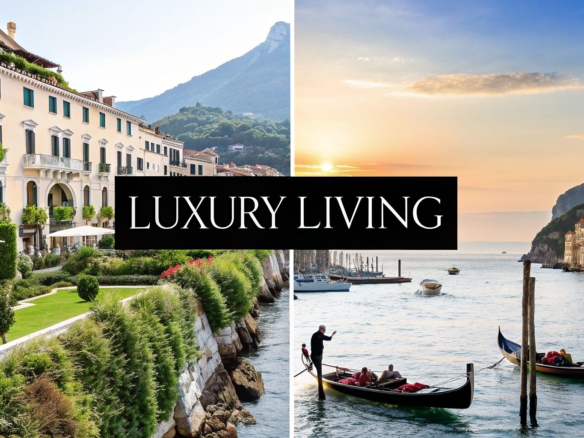

For high-net-worth individuals (HNWIs), Europe isn't just a destination; it’s a strategy. It offers a rare mix of political stability, cultural depth, and a sophisticated way of life, making it the world’s top choice for a second home. These properties are far more than luxury hideaways—they are cornerstone assets for preserving wealth and diversifying a portfolio in an unpredictable global climate.
Why Europe Captivates High-Net-Worth Individuals
When a discerning international investor decides to buy a second home in Europe, it’s a calculated move that goes well beyond lifestyle. It’s a strategic placement of capital into one of the most resilient and sought-after real estate markets on the planet. Unlike more volatile investments, prime European property has a proven track record of preserving wealth, acting as a sturdy hedge against inflation and economic turbulence.
This powerful appeal is built on a few core pillars that resonate deeply with the priorities of today’s HNWIs.
A Sanctuary of Stability and Security
In a world of constant geopolitical shifts, Europe's solid legal frameworks and political stability offer a reassuring sense of permanence. For an investor coming from a less stable region, a European property isn't just a home—it’s a secure foothold on a continent governed by the rule of law. This security is often the number one driver for those looking to protect their family's future and assets for generations to come.
"Today's HNWI buyers are looking beyond the address; they seek a tangible asset that secures wealth, offers lifestyle returns, and provides a strategic foothold in a stable region."
– Nick Marr, Founder of EuropeanProperty.com
Unmatched Lifestyle and Cultural Richness
Of course, it’s not all about the balance sheet. There's the unparalleled quality of life that Europe offers. The continent is a rich tapestry of cultures, history, and breathtaking landscapes, providing the perfect backdrop for an exceptional lifestyle. From the sun-drenched coastlines of the Mediterranean to the crisp, clean air of the Swiss Alps, Europe delivers a depth of experience that simply can’t be found elsewhere.
This lifestyle includes effortless access to:
- World-class cultural events: Think exclusive art festivals, historic opera houses, and ancient landmarks right on your doorstep.
- Gourmet experiences: Michelin-starred restaurants and legendary wine regions are part of the local fabric.
- Exclusive leisure activities: Premier skiing, private yachting, and championship golf courses are all within easy reach.
For many HNWIs, the appeal extends beyond the property itself to a complete luxury ecosystem, which often includes seamless private travel. For a deeper dive into this aspect of high-end living, it's worth understanding luxury aviation options. This holistic view of living well is a massive part of the decision.
A Strategic Component of a Global Portfolio
At the end of the day, acquiring second homes for HNWIs in Europe is a sharp investment play. These properties wear multiple hats: they are tangible, enjoyable assets that also diversify a global portfolio, shielding it from market swings. For many, they become legacy assets—properties passed down through generations, embodying both financial foresight and cherished family memories. It's this blend of financial prudence and personal fulfilment that makes Europe an enduringly powerful proposition.
Exploring Europe's Premier Second Home Markets
Europe’s luxury property market isn’t one single entity. It’s a fascinating collection of distinct, high-performing markets, each with its own personality and investment profile. For high-net-worth individuals, choosing a second home is as much about fulfilling profound lifestyle dreams as it is about hitting financial targets. Getting to grips with what makes each prime location tick is the secret to a smart acquisition.
From the timeless glamour of the Côte d'Azur to the tranquil vineyards of Tuscany, certain destinations have been synonymous with HNWI living for generations. These are markets built on a bedrock of prestige. But alongside these established names, new hotspots are popping up, offering fresh opportunities and compelling value for the astute investor.
The Enduring Appeal of Classic Destinations
Some places just have a magnetic pull for global wealth. The French Riviera, for instance, remains the gold standard for luxury coastal living. It’s that potent mix of breathtaking sea views, exclusive beach clubs, and world-class events that creates an irresistible draw for those wanting a vibrant social scene and a rock-solid asset.
In a similar vein, Italy's Tuscany region offers a different but equally powerful allure. Here, the dream is one of privacy, heritage, and a much slower pace of life. Investors are drawn to historic farmhouses and grand villas nestled in rolling hills—assets that offer a tangible connection to European culture. These markets are mature, stable, and always in demand. You can explore a detailed analysis of high-end real estate in the French Riviera on our site to learn more.
Rising Stars on the HNWI Radar
Beyond the traditional playgrounds of the wealthy, other European regions are quickly making a name for themselves. Portugal's Algarve, with its stunning coastline, championship golf courses, and attractive tax schemes, has become a top choice for buyers chasing both lifestyle and value. The region has seen serious price growth in its prime property market, yet it still offers a competitive entry point compared to its more established Mediterranean neighbours.
The Swiss Alps also continue to command significant attention, especially in rarefied towns like Gstaad and St. Moritz. These destinations are prized for their exceptional quality of life, discretion, and year-round appeal. They offer a dual-season lifestyle—world-class skiing in winter, pristine hiking in summer—making them perfect for families and active individuals searching for second homes for HNWIs in Europe.
This infographic perfectly captures the core motivations driving HNWIs toward these premier European markets.

As the data shows, while lifestyle and wealth preservation are clearly vital, the overwhelming priority for today’s HNWI buyer is the fundamental stability a location can offer.
Understanding Property Styles and Investment Metrics
Each market has its own distinct architectural flavour and investment dynamics. When you’re weighing up a location, it’s crucial to look past the beautiful aesthetics and dig into the underlying data.
-
Property Types: The French Riviera is dominated by modern beachfront villas and elegant Belle Époque apartments. Tuscany, on the other hand, is known for its lovingly restored casali (farmhouses) and historic palazzos. In the Swiss Alps, it’s all about luxury chalets with state-of-the-art amenities.
-
Price Trends: Prime property values in Lisbon and the Algarve have shown remarkable growth and resilience, fuelled by international demand. Meanwhile, markets like Monaco hold their position as the world's most expensive, offering unparalleled security for capital preservation.
-
Rental Yields: For investors focused on income, destinations with strong tourist appeal like Ibiza or Mykonos can deliver attractive rental yields, especially in peak season. Ibiza, for example, has everything from secluded hillside villas with valuable tourist licences to contemporary homes perfect for high-yield holiday lets.
A second home is no longer just a holiday spot; it's an active component of a sophisticated wealth strategy. The savviest investors are analysing rental yields, capital appreciation potential, and local economic forecasts with the same rigour they would apply to any other asset class.
The key is to align the property type and location with your specific financial goals—whether that’s long-term capital growth, steady rental income, or pure wealth preservation.
Comparing Europe's Top Second Home Destinations for HNWIs
To put it all into perspective, here's a side-by-side look at how Europe's top five destinations stack up for HNWI buyers. This table breaks down the key investment and lifestyle factors you need to consider.
| Location | Average Prime Property Price (€/sqm) | Key Lifestyle Appeal | Investment Potential | Typical HNWI Buyer Profile |
|---|---|---|---|---|
| French Riviera, France | €25,000 – €40,000+ | Glamorous social scene, yachting, Michelin-starred dining | Strong capital preservation, consistent high-end rental demand | Established wealth, seeking prestige and a vibrant social calendar. |
| Tuscany, Italy | €8,000 – €15,000 | Privacy, culture, gastronomy, vineyard lifestyle | Stable long-term growth, legacy asset potential | Discerning buyers focused on heritage, culture, and seclusion. |
| Algarve, Portugal | €7,000 – €12,000 | Championship golf, pristine beaches, favourable tax regime | High growth potential, strong rental yields, rising demand | Lifestyle-driven investors, tech entrepreneurs, and retirees. |
| Swiss Alps, Switzerland | €20,000 – €35,000+ | Skiing, outdoor pursuits, security, discretion | Safe-haven asset, excellent wealth preservation | Ultra-private individuals and families seeking security and an active lifestyle. |
| Ibiza, Spain | €12,000 – €22,000 | World-class entertainment, wellness retreats, bohemian luxury | High seasonal rental yields, strong brand recognition | Younger HNWIs, creatives, and investors focused on income generation. |
This comparison really highlights the diversity of opportunities available across the continent. Ultimately, choosing the right market comes down to a careful assessment of these factors against your personal and financial blueprint. Whether your priority is the prestige of a classic hotspot or the growth potential of an emerging star, Europe offers a premier second-home market to match every objective.
Why London Remains a Magnet for UHNW Property
While continental Europe is dotted with idyllic lifestyle destinations, London stands in a class of its own. It operates on a completely different level in the global luxury property market, functioning less as a seasonal retreat and more as a permanent, high-value fixture in the portfolios of the world's ultra-wealthy. Even with political shifts and changing tax rules, London’s prime property market shows a remarkable resilience that keeps UHNW capital flowing in.

The city’s enduring appeal is built on a powerful mix of financial muscle, cultural depth, and market liquidity that few other global cities can match. It’s this unique ecosystem that solidifies its status as a top-tier destination for second homes for HNWIs in Europe.
The Financial and Legal Bedrock
London’s strength as a premier global financial centre is the engine driving its property market. It’s a hub for international banking, asset management, and corporate headquarters, which means a constant influx of top executives and business leaders needing premium homes. This creates a baseline of demand that holiday-led markets simply can’t replicate.
Beyond that, the UK’s common law system offers a level of security and transparency that international investors find incredibly reassuring. Property rights are fiercely protected and the buying process is straightforward and well-established, making it a trusted place to deploy serious capital. This legal stability is a huge draw, especially for buyers from regions with less predictable regulatory landscapes.
A World City for Culture and Education
It’s not all about finance. London offers a lifestyle of extraordinary variety and richness. The city is home to some of the world’s most prestigious institutions, from the British Museum to the Royal Opera House, alongside a world-class contemporary art and theatre scene. For UHNW families, this cultural depth is a massive pull factor.
Education is another critical piece of the puzzle. London has an exceptional concentration of world-class schools and universities, making it a prime spot for families planning for their children’s futures. A second home in London often serves a dual purpose: it's a strategic asset and a base for giving the next generation a top-tier global education. This multi-generational appeal keeps demand high for larger, family-sized properties in the best postcodes. To get a feel for what’s on offer, you can explore some of the finest luxury homes for sale in Knightsbridge, London right now.
Unmatched Market Liquidity and Transaction Volume
One of London’s biggest advantages is the sheer liquidity of its luxury property market. Unlike some niche European spots where a high-value home can sit on the market for years, London’s prime real estate scene is always active. There is a constant pool of motivated international buyers, which means a well-priced asset can be sold relatively quickly.
This liquidity provides a clear exit strategy, giving investors confidence that their capital won’t be tied up in an illiquid asset. It also reinforces London’s role as a secure store of wealth. The data backs this up, showing London as Europe's top destination for UHNWIs buying secondary residences. An impressive 59% of its UHNW property owners hold these assets as second homes, putting it third globally behind only Miami and New York.
London's prime property market isn't just about owning a home; it's about owning a tradable, high-value asset in a globally recognised currency. The ability to enter and exit the market with relative ease is a strategic advantage that seasoned investors value highly.
Even with recent shifts, like the abolition of the non-domiciled tax status, the market has proven it can adapt. The core fundamentals—its economic power, cultural significance, and asset liquidity—are still firmly in place. For the global elite, a London property is far more than just a residence; it's a legacy asset and a vital part of a diversified, resilient wealth strategy.
How to Navigate the European Property Purchase Process
Buying a high-value second home in Europe is an exciting prospect, but it’s a world away from a straightforward domestic purchase. You're not just buying a property; you're navigating a patchwork of different legal systems, local customs, and transaction protocols that can vary dramatically from one border to the next. For high-net-worth buyers, understanding this landscape isn't just helpful—it's the first step to a secure and seamless acquisition.
Think of it less as a single path and more as a series of country-specific journeys. Each jurisdiction has its own rhythm and key players, demanding a bespoke approach rather than a one-size-fits-all strategy. Being well-prepared and properly advised is the only way to sidestep common pitfalls and frustratingly expensive delays.
Understanding the Legal Frameworks
At the heart of Europe's property market are two fundamentally different legal systems: Civil Law and Common Law. Getting your head around the difference is essential for any international buyer.
-
Civil Law Countries (e.g., France, Spain, Italy, Germany): In these markets, the notary is king. Known as a notaire in France or notaio in Italy, this isn't just any lawyer. They are a state-appointed public official who acts as a neutral third party, ensuring the entire transaction is legal and valid for both buyer and seller. They draft the final deed of sale, authenticate it, and make sure it’s legally ironclad.
-
Common Law Countries (e.g., UK, Ireland): This system is adversarial by nature. Each side brings their own champion to the table—a solicitor or conveyancer—whose sole duty is to protect their client's interests. There’s no impartial state official overseeing things; instead, the lawyers for the buyer and seller negotiate, conduct due diligence, and hammer out the terms until contracts are exchanged.
For buyers used to the Common Law system, the role of the notary is a critical concept to grasp. They are the ultimate gatekeepers of the deal, checking everything from property titles to tax payments. This provides a fantastic layer of security but introduces a completely different rhythm to the process.
This single distinction colours every stage of the purchase, from how you make an offer to the moment the keys are in your hand.
The Key Stages of a European Property Purchase
While the small details change from place to place, the journey to acquiring a second home for HNWIs in Europe generally follows a well-trodden path. Here’s a typical timeline:
-
Assemble Your A-Team: Before you even think about making an offer, get your professional team in place. This should always include a reputable local estate agent, an independent lawyer who specialises in property law for foreign buyers, and a tax advisor with cross-border experience.
-
Make an Offer & Sign the Preliminary Agreement: Once you’ve found the one, your agent will submit a formal offer. If it’s accepted, you’ll usually sign a preliminary contract—like the compromis de vente in France or contratto preliminare in Italy. This locks in the key terms and requires a deposit, typically 5-10% of the purchase price.
-
Conduct Watertight Due Diligence: Now your lawyer really earns their keep. They will run comprehensive checks on the property’s legal status, digging into title deeds, planning permissions, land registry records, and any hidden debts or claims against the property. This is where you mitigate almost all of your risk.
-
Completion and Final Transfer: The final step is signing the deed of sale (acte de vente or escritura pública). In Civil Law countries, this is done in the notary’s office. Once all funds, taxes, and fees are paid, the property title is officially registered in your name, and you can pop the champagne.
It’s also interesting to see how wider wealth migration trends can impact market dynamics. Right now, the UK is projected to see a net outflow of 16,500 millionaires. Paradoxically, this actually strengthens the prime second-home market, as the remaining and incoming HNWIs seek stable European footholds. You can dig into the full analysis of these global movements in the Henley Private Wealth Migration Report 2025.
Choosing the Right Ownership Structure
One final, but crucial, strategic decision is how you will own the property. This choice has major implications for tax, liability, and inheritance planning down the line.
-
Direct Personal Ownership: This is the simplest option, where the property is registered directly in your name (or names). It’s straightforward but offers little in the way of tax optimisation or liability protection.
-
Corporate Entity Ownership: Here, you hold the property through a company, like an SCI in France or a UK Limited Company. This can provide significant advantages for tax planning and confidentiality and can make transferring ownership much easier. However, it comes with extra administrative costs and compliance duties.
This isn’t a decision to make lightly. It should be made in close consultation with your legal and tax advisors, tailored perfectly to your personal circumstances and what you want to achieve in the long term.
Mastering the Financial and Tax Landscape
Buying a high-value European property is a serious financial move. For high-net-worth individuals, the game isn’t just about the purchase price—it’s about optimising the entire financial structure to preserve wealth and maximise tax efficiency. This means thinking about bespoke financing and navigating a complex web of cross-border tax rules right from day one.
The first port of call is usually a private bank or a specialised lender. These institutions get the unique financial makeup of HNWIs and can put together solutions that are miles more flexible than what you’d find on the high street.
Bespoke Financing for High-Value Assets
Standard mortgages rarely cut it in the HNWI world. Instead, you should be exploring tailored credit facilities designed for complex, international asset portfolios.
These often include:
- International Mortgages: Lenders with a global presence can offer mortgages secured against assets across different countries, giving you far greater flexibility.
- Private Banking Credit Lines: Many HNWIs prefer to leverage their existing investment portfolios. Private banks can provide hefty credit lines secured against stocks, bonds, or other assets. This can be a much faster and more tax-efficient way to free up capital for a property purchase.
The real advantage here is in the structuring. A cleverly designed financing package can minimise your tax liabilities and fit neatly into your wider wealth management strategy. This is a conversation you need to have early on, as the way you finance the purchase can influence the ownership model you ultimately choose.
Navigating Europe's Tax Labyrinth
The tax implications of buying, owning, and eventually selling a second home in Europe are huge, and they change dramatically from one country to the next. A lack of foresight here can lead to very expensive surprises that eat away at your investment's value. Proactive planning isn’t just a good idea; it’s absolutely essential.
Key taxes you'll need to plan for include:
- Property Transfer Tax: This is a one-off tax you pay when you buy. In the UK, it’s called Stamp Duty Land Tax (SDLT), in Spain it's the Impuesto sobre Transmisiones Patrimoniales (ITP), and in France, it’s the Droit de Mutation. Rates can be steep, often hitting 8-10% of the property's value.
- Annual Property & Wealth Taxes: Many countries levy annual taxes. France has its taxe foncière, while countries like Spain and Switzerland have wealth taxes where your property is included in the calculation.
- Capital Gains Tax (CGT): This is the tax you’ll owe on the profit when you sell. Rates, exemptions, and allowances are all over the place, and your residency status is often a deciding factor.
- Inheritance Tax: Cross-border inheritance laws are notoriously complicated. You absolutely need a plan to ensure the asset can be passed on to the next generation smoothly and tax-efficiently.
Getting specialised tax advisors involved from the very beginning is the single most important step you can take. An optimised ownership structure, set up before you buy, can save you hundreds of thousands in tax over the lifetime of your investment.
If you’re looking at a property in the UK, for instance, getting your head around stamp duty is critical. You can learn more from a comprehensive guide to Stamp Duty Land Tax to prepare for this specific cost. On the other hand, some countries offer attractive tax incentives or residency-by-investment schemes that can be strategically tied to a property purchase. For a detailed look at these opportunities, our luxury property Golden Visa guide for 2025 is a great resource.
Ultimately, mastering this financial and tax landscape is fundamental to protecting and growing the value of your European second home.
The Strategic Value of a European Second Home
A second home in Europe is far more than just a lifestyle purchase; it’s a powerful strategic asset that can add serious depth and resilience to a high-net-worth portfolio. For savvy investors, prime European property is a vital tool for wealth preservation, offering a kind of stability that simply isn't tied to the often-wild swings of global financial markets.
This tangible asset acts as a solid hedge against inflation, providing a secure store of value that holds its worth for generations. It’s this unique blend of personal enjoyment and financial security that elevates second homes for HNWIs in Europe from a simple luxury to a core part of a sophisticated wealth strategy.

A Gateway to Global Mobility
Beyond its financial upside, European real estate has become a key that unlocks greater global mobility. For non-EU citizens, a property investment is often the most direct path to securing residency through 'Golden Visa' programmes.
Countries like Portugal, Greece, and Spain have long offered these schemes, giving investors and their families the right to live, work, and travel freely across the Schengen Area. While the rules are always changing, the core idea remains the same: a strategic property purchase can deliver profound personal freedom and a valuable 'plan B' for global citizens. This double benefit of asset ownership and increased mobility is a huge driver for many HNWIs today.
A second home in Europe is a multifaceted investment. It’s a tangible asset that protects capital, a key that unlocks greater freedom of movement, and a legacy for the future. HNWIs are increasingly allocating more of their portfolios to real estate because few other assets can deliver returns on so many different levels.
A Core Component of Modern Wealth Allocation
The trend towards real estate as a strategic asset is undeniable. According to Knight Frank's latest Wealth Report, 70% of surveyed HNWIs already own property, with a clear preference for second homes in stable markets like the UK, viewing them as versatile assets in uncertain economic times. While rental appeal is a bonus, the main driver is long-term wealth preservation. You can dive into the full research on HNWI property trends in Knight Frank's report.
This data highlights a fundamental shift in mindset. HNWIs aren't just buying property anymore; they're investing in security, lifestyle, and a strategic edge. The decision to buy a European second home is therefore a calculated one, balancing financial returns with priceless lifestyle benefits and long-term security in one of the world's most desirable regions.
Common Questions from HNWI Property Buyers
When navigating the purchase of a high-value European property, it is only natural for some big questions to come up. Below, we have put together clear, expert answers to the queries we hear most often from clients considering a second home for HNWIs in Europe.
What Are the Key Differences in Property Ownership Laws?
This is a big one. European countries generally fall into one of two camps: civil law nations (like France and Spain) and common law nations (like the UK and Ireland). The simplest way to understand the difference is to look at who runs the show.
In civil law countries, a notary—a neutral, state-appointed official—oversees the entire deal to ensure it’s legally sound for everyone involved. Switch over to a common law system, however, and each party brings their own solicitor to the table, whose sole job is to fight for their client's best interests. Grasping this distinction early on is fundamental; it shapes everything from the purchase timeline to how due diligence is handled.
How Do Golden Visa Programmes Impact Property Investment?
Golden Visa programmes, offered by countries like Portugal and Greece, are a game-changer for many non-EU buyers. By making a qualifying real estate investment, you can gain a residency permit, which opens up visa-free travel across the Schengen Area.
Suddenly, your second home isn't just a lifestyle asset—it's a powerful tool for global mobility and personal freedom. For some, it can even be a pathway to full citizenship. But be warned: the investment thresholds and rules are constantly shifting, so getting up-to-date professional advice is absolutely essential.
What Are the Most Important Tax Considerations?
For a non-resident buyer, the tax landscape has several layers you need to plan for. First, there are the one-off purchase taxes, like Stamp Duty. Then come the annual costs, such as property and wealth taxes. And if you plan to rent out your home, you'll also be taxed on that income.
But it doesn’t stop there. You also have to think long-term about Capital Gains Tax when you eventually sell, not to mention the complexities of cross-border inheritance laws. Bringing a specialist tax advisor on board from the very beginning isn’t just a good idea—it's non-negotiable if you want to structure the ownership efficiently and sidestep costly mistakes down the line.
About EuropeanProperty.com
EuropeanProperty.com is Europe’s longest-running luxury real estate platform, online since 1999. It connects luxury real estate agents, developers, and homeowners with high-net-worth buyers and international investors.
Looking for expert mortgage guidance? Get luxury property mortgage advice here:
👉 https://europeanproperty.com/luxury-overseas-mortgages/
Explore more overseas homes for sale at our global partner site:
👉 https://homesgofast.com/overseas-property/