
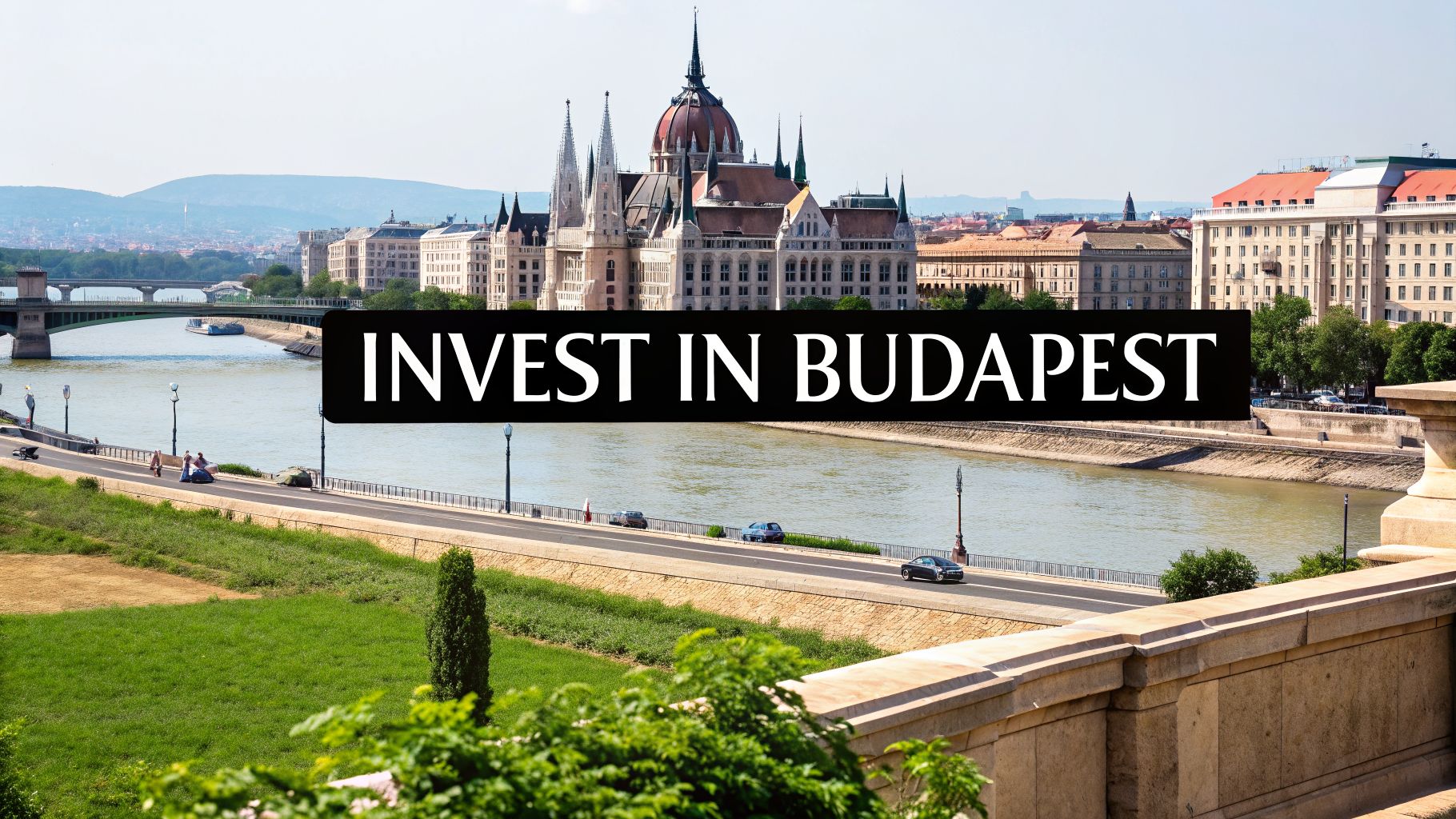
For savvy global investors, a search for properties for sale in Budapest quickly reveals a market that’s not just rich in architectural splendour but also in genuine value. This grand old European capital offers a rare mix of heritage properties and modern luxury, making it a smart alternative to the often-overheated markets in Western Europe. As discerning buyers seek out new opportunities, the unique appeal of this historic city is becoming impossible to ignore for those building a premier Luxury Property For Sale portfolio.
Why Budapest Is a Prime Target for Global Property Investors

Budapest is a city that wears its history, culture, and economic resilience on its sleeve, and that’s precisely what makes it such a hotspot for international property buyers. Known as the "Pearl of the Danube," its appeal goes far beyond pretty pictures. It’s grounded in a buzzing economy and a quality of life that easily rivals its European peers—but at a far more attractive price point.
For high-net-worth individuals, Budapest’s charm is layered. The city’s real estate scene is famous for its magnificent period buildings, especially the classic turn-of-the-century architecture dominating the central districts. These properties aren’t just homes; they’re a piece of European history, complete with soaring ceilings, ornate details, and a character you just can't replicate. This makes the Budapest luxury real estate market a compelling study in both heritage and investment potential.
A Market of Opportunity and Value
Beyond the beautiful facades, the numbers tell a compelling story. Put prime real estate in Budapest up against cities like Vienna, Prague, or Lisbon, and you’ll see exceptional value. While property prices have seen healthy growth, they haven’t hit the dizzying heights of other EU capitals, which points to plenty of room for capital appreciation.
The logic for looking at properties for sale in Budapest is backed by a few key truths:
- Economic Stability: Luxury Homes For Sale in Hungary's economy has proven its resilience, pulling in foreign investment that directly feeds into the property market.
- Cultural Vibrancy: A world-class arts scene, famous thermal baths, and Michelin-starred restaurants create a sophisticated lifestyle that pulls in a global crowd.
- Growing Demand: The city is a major hub for tourism, students, and businesses, ensuring a steady demand for both long-term and short-term rentals.
Nick Marr notes that "Budapest continues to attract sophisticated buyers who recognise the long-term value in its prime districts. It’s a market where historical elegance and modern investment logic converge, offering a compelling proposition for portfolio diversification."
Strategic Timing for Acquisition
The current market feels like a strategic window of opportunity. It’s no longer the wild west of the post-EU accession boom, but it’s a balanced environment where smart buyers can still find high-end investment property in Budapest. Demand from international buyers—especially from Western Europe, the USA, and the Middle East—remains strong, keeping the luxury end of the market stable.
This unique blend of cultural soul, architectural grandeur, and solid economic sense is what makes the city stand out. As you explore why Budapest is one of Europe's hidden gems, you start to see its unique appeal—a city that deeply respects its past while confidently building its future.
Decoding The Current Budapest Real Estate Market
To make smart moves in properties for sale in Budapest, you need to peer beyond the city’s grand façades and tune into the subtle rhythms of its property world. Think of it like exploring a historic building: its beauty is obvious, but the real story lies in the hidden corners.
Over the past few years, Budapest enjoyed a surge in prices thanks to strong foreign demand and a robust local economy. Lately, however, prices have plateaued, signalling a natural cooling rather than a faltering market. In other words, we’ve moved from full throttle into a steady cruise—an inviting moment for buyers who value balance over competition.
Price Trends And Transaction Volumes
Recent data paints a picture of two distinct tiers.
On one hand, prime central districts—those that international buyers adore—have shrugged off much of the slowdown. On the other, wider neighbourhoods have seen transaction volumes dip. Yet, demand for top-tier apartments in key locations remains remarkably steadfast.
• Prime vs Secondary: In a correction phase, quality wins out. Buyers prioritise location, architectural character and rental appeal.
• Resilience Of Core Areas: Districts I and V, for example, saw only modest price dips compared with broader markets.
Nick Marr of EuropeanProperty.com notes, “Budapest’s prime real estate sector is demonstrating real maturity. The recent market recalibration is sifting speculative assets from true investment-grade properties. Savvy buyers can now secure premium real estate with less competition, focusing on long-term capital preservation and lifestyle returns.”
Key Market Drivers And Headwinds
That said, every market has its engines and its obstacles. Here’s what to watch:
Key Drivers
- Persistent Foreign Interest: Buyers from across Europe, the USA and the Middle East still see great value here.
- Economic Resilience: Hungary’s ability to attract foreign direct investment underpins job growth and housing demand.
- Lifestyle Appeal: A blend of rich culture, top universities and a buzzing business scene keeps professionals and students arriving year after year.
Potential Headwinds
- Interest Rate Environment: Shifts in borrowing costs can temper local sentiment, putting some deals on ice.
- Regulatory Changes: New rules on short-term lets mean investors may need to rethink yield strategies.
In many ways, these headwinds offer windows of opportunity. For UK buyers, recent corrections in central districts have created attractive entry points. While Districts I and V saw only single-digit downturns, rivals faced deeper pullbacks—making the former more appealing for long-term holds. For a deeper dive, check this recent Hungarian analysis on Investropa.
Here’s a quick overview of the crucial metrics every luxury investor should track:
Budapest Prime Property Market At a Glance
Below is a summary of key market indicators for luxury property investors considering Budapest.
| Metric | Recent Data Point | Investor Implication |
|---|---|---|
| Prime Property Price Growth | Stable to modest growth | Focus on central districts for capital preservation and steady appreciation. |
| Transaction Volume | Moderated from recent peaks | Reduced competition creates room for negotiation on select properties. |
| Rental Yields (Long-Term) | 4–5% in prime areas | A shift to long-term lets offers stable, predictable income streams. |
| Foreign Buyer Demand | Remains robust | Strong international interest provides a solid foundation for liquidity. |
By keeping these figures in your sights, you’ll be better equipped to spot undervalued gems and navigate Budapest’s luxury market with confidence.
Exploring Budapest's Most Desirable Districts for Buyers
Choosing the right location is everything when you’re looking at properties for sale in Budapest. Each district has its own distinct personality, lifestyle, and investment profile. The city really is a mosaic of neighbourhoods, from the imperial grandeur of Pest’s city centre to the quiet, leafy enclaves of Buda. Getting to grips with these differences is the first step to finding a property that ticks all your boxes, both financially and personally.
Budapest’s property market is incredibly localised—values and appeal can change dramatically from one street to the next. For savvy international buyers, three areas consistently come out on top: the prestigious District V, the culturally rich District VI, and the tranquil, upscale Buda Hills (Districts II and XII). Each offers a unique proposition for anyone looking for premium apartments in Budapest.
This chart gives you a quick snapshot of the recent market shifts that are shaping the city's property landscape right now.

As you can see, the market is in a state of flux. Price growth has cooled after a period of rapid acceleration, and transaction volumes have dropped off, suggesting a shift towards a more balanced, buyer-friendly market.
District V: The Political and Financial Epicentre
District V, also known as Belváros-Lipótváros, is the undisputed heart of Budapest. It’s home to the Hungarian Parliament, St. Stephen's Basilica, and major financial institutions, giving it an undeniable atmosphere of power and prestige. The real estate here is defined by magnificent, turn-of-the-century apartment buildings, many with breathtaking views over the Danube.
Properties in this district command the city’s highest prices per square metre. Renovated classical apartments and exclusive penthouses are the most sought-after assets. Its appeal is easy to understand:
- Unbeatable Centrality: You have immediate access to high-end dining, luxury retail on Váci Street, and all the key cultural landmarks.
- Architectural Grandeur: This is your chance to own a piece of history in beautifully preserved buildings with soaring ceilings and ornate details.
- Stable Investment: These properties are considered blue-chip assets. They hold their value exceptionally well, even during market downturns.
For investors, District V offers a secure place to park your capital, delivering consistent—if moderate—rental yields from corporate tenants and diplomatic staff.
The Buda Hills (Districts II and XII): Exclusive and Serene Living
Cross the Danube to the Buda side, and you'll find a completely different world. The Buda Hills, especially Districts II and XII, offer a tranquil, green escape from the city’s buzz while still being just a short drive from the centre. This is where you’ll find the city’s most luxurious villas, modern minimalist homes, and exclusive gated communities.
This area is a firm favourite with affluent Hungarian families, expatriate executives, and diplomats, thanks in large part to its prestigious international schools and embassies. The lifestyle here is all about privacy, space, and nature, with sprawling parks and hiking trails on your doorstep. If you're curious about the calibre of properties available here, this elegant apartment for sale in Budapest's prestigious 2nd district gives you a great idea of what to expect.
The Buda Hills represent the absolute peak of lifestyle-driven buying in Budapest. People here aren’t just acquiring property; they're investing in a secure, family-focused environment with unparalleled access to green space.
District VI: The Cultural Boulevard
District VI is defined by the iconic Andrássy Avenue, a UNESCO World Heritage site often called the Champs-Élysées of Budapest. Lined with neo-renaissance mansions, luxury boutiques, and the State Opera House, this district is the city's cultural soul. The property here ranges from grand apartments in historic "palace buildings" to stylishly renovated flats on the vibrant streets branching off the avenue.
Investors are drawn to District VI for several compelling reasons:
- Cultural Proximity: It's the epicentre of theatre, music, and art, which attracts a sophisticated tenant base.
- Excellent Connectivity: The M1 metro line—the continent's oldest underground—runs directly beneath Andrássy Avenue.
- Rental Demand: The area is exceptionally popular for both long-term and short-term rentals (where regulations allow) due to its huge tourist appeal.
While a recent ban on new short-term lets in parts of the district has shifted the rental game, demand from long-term tenants looking for a vibrant, central lifestyle remains incredibly strong. Finding the right properties for sale in Budapest here means securing a culturally rich and fantastically well-connected asset.
Navigating Budapest's Shifting Rental Market
For anyone eyeing properties for sale in Budapest, getting a grip on the rental market is non-negotiable. It’s the engine that drives your returns.
Not long ago, Budapest was a goldmine for short-term lets. That landscape has completely changed. New regulations, brought in to find a better balance between tourism and local housing, mean the old high-turnover model is no longer the easy win it once was.
The freewheeling days of unrestricted Airbnb-style rentals in the city centre are over. New tax laws and district-by-district rules have fundamentally altered the maths for investors. The smart money is now pivoting, recognising that the city's strong fundamentals support a huge demand for other types of rentals.
This regulatory shift has actually created a more mature, predictable investment environment. While the spectacular yields of the Airbnb boom are harder to come by, consistent, attractive returns are still very much on the table for those who adapt.
The New Rules of the Game
The changes have been decisive. Several central districts, including parts of the ever-popular District VI, have put strict limits or even outright bans on new short-term rental licenses. It was a direct response to the rising cost of living for locals, designed to push properties back into the long-term market.
For property owners, the financial hit is real. The government slapped higher taxes on income from short-term lets, which eats directly into your net yields.
These moves signal a clear direction from policymakers. Investors are now being pushed to serve the city’s permanent and semi-permanent residents—think students and corporate professionals. Ultimately, it’s fostering a more sustainable rental ecosystem.
To put it in perspective, short-term rentals once made up a staggering 40% of Budapest's accommodation, fuelled by millions of visitors each year. But with some levies quadrupling, the margins on smaller flats have been squeezed hard. While this has cooled average monthly rents, it creates an opportunity for buyers who can either absorb the costs or, more wisely, pivot their strategy. You can read more about the end of the Airbnb gold rush on OpenPR.com.
Pivoting to Long-Term Rental Strategies
The clear strategic move here is a shift to long-term rental models. They still offer great, stable returns, and Budapest’s status as a major European hub for business and education provides a deep and reliable tenant pool.
Two groups have become the bedrock of the long-term market:
- Student Housing: Budapest is home to several world-class universities with a massive international student body. They provide consistent, academic-year-long demand for modern, well-located flats.
- Corporate Lettings: As a regional business centre, the city draws a steady stream of expats and professionals on medium to long-term contracts. These tenants are often looking for high-quality, fully furnished properties in prime central locations and have the budget to match.
Understanding Yields and Vacancy Rates in the New Market
Even with this market shift, rental yields for long-term lets in Budapest’s prime districts hold their own against other European capitals. Gross yields for well-managed properties typically land somewhere between 4% to 5%. Combine that with the potential for long-term capital growth, and properties for sale in Budapest remain a seriously compelling proposition.
Vacancy rates in the long-term sector are generally low, especially for high-quality apartments in the right spots. The secret is simple: pick properties that match what your target tenants need. Proximity to university campuses, business districts, and public transport is everything.
By adapting to the new rules, investors can build a profitable and resilient rental portfolio. The game has just changed—it's less about chasing quick, short-term gains and more about cultivating stable, long-term income streams. This evolution cements Budapest’s position as a mature and sophisticated market for property investment.
How to Buy Property in Hungary as a Foreign Buyer

Buying a premium apartment or villa in Budapest is a clear-cut process, but it’s essential to get it right, especially as an international buyer. The good news is that for citizens of EU and EEA member states, the path to ownership is identical to that for Hungarian nationals—it’s straightforward and efficient.
For non-EU citizens, there’s just one extra step, but it’s a manageable formality that a good lawyer can handle for you.
Speaking of lawyers, they are the cornerstone of any property deal in Hungary. Unlike in some countries where a lawyer is merely recommended, here, their involvement is mandatory. Your lawyer is responsible for everything from drafting the sales contract to verifying the property’s title and officially registering you as the new owner at the Land Registry. It's a system built for security.
If you're new to buying abroad, getting a handle on the basics is always a good starting point. This general guide on how to buy property overseas provides a solid foundation before diving into Hungary's specific rules.
The Permit Process for Non-EU Buyers
If you're from outside the EU or EEA, you'll need a government permit from the local Land Registry Office to purchase real estate. Don't let this put you off—it's a standard administrative check, and permits are almost always granted unless the purchase somehow conflicts with national interests.
Your lawyer will manage this entire application for you. The permit usually comes through within 30 to 60 days, and once it's in hand, you're clear to finalise the purchase and get the title deed in your name.
"The Hungarian system is designed to be secure and transparent. The mandatory involvement of a lawyer and the formal permit process for non-EU nationals ensure that every transaction is properly vetted, protecting both the buyer and the integrity of the market."
Key Steps in the Purchase Process
The buying journey follows a logical sequence. While your lawyer will guide you every step of the way, knowing the roadmap helps you stay in control.
- Hire a Lawyer: This is your first move. Find a reputable Hungarian property lawyer who will act solely in your interest.
- Make Your Offer: Once you’ve found the right property, your agent submits a formal offer to the seller.
- Sign the Preliminary Contract: When the offer is accepted, your lawyer drafts a preliminary sales agreement. This is when you'll pay a deposit—typically 10% of the purchase price—into your lawyer’s secure escrow account.
- Get the Purchase Permit (non-EU buyers only): Your lawyer submits the application on your behalf.
- Finalise and Pay: As soon as the permit is granted, the final contract is signed and you transfer the remaining balance.
- Register the Title: Your lawyer takes the final contract to the Land Registry to officially make you the new owner. The registration process itself can take a few more weeks to be completed.
Associated Costs and Taxes
Budgeting for closing costs is just as important as negotiating the purchase price. Beyond what you pay for the property, make sure you account for these additional expenses:
- Stamp Duty (Property Transfer Tax): This is the biggest extra cost, set at a flat 4% of the property’s market value.
- Legal Fees: Expect to pay between 1% and 1.5% of the purchase price, plus VAT.
- Administrative Fees: These are minor charges for Land Registry applications and other paperwork.
All in, you should set aside an extra 5-6% of the purchase price to cover all transactional costs. For more on how these costs compare across the continent, our guide on the essentials of buying property in Europe offers valuable context.
Diversifying Your Portfolio with Commercial Real Estate
While a stunning Danube-view apartment is always a crown jewel, the savviest investors understand that a truly bulletproof portfolio needs more than just residential assets. If you're looking to build long-term wealth, Budapest's commercial real estate scene—especially its booming industrial and office markets—is an opportunity you can't ignore. Adding this layer diversifies your holdings and introduces a steady, income-generating stream alongside your residential properties for sale in Budapest.
Budapest's prime location in the heart of Central Europe, combined with a strong economy and a healthy appetite for foreign investment, has lit a fire under these commercial sectors. The soaring demand for modern logistics hubs and Grade A office space is a direct result of Hungary's growing importance as a key business and distribution centre.
The Industrial and Logistics Boom
Budapest’s industrial and logistics market is expanding at a remarkable pace. For UK-based investors and agents, this presents a fascinating chance to diversify away from the purely residential.
The city's total industrial and logistics stock shot past 4.082 million sqm in 2025. Net take-up hit a massive 448,000 sqm, even as vacancy rates climbed to 12.8%. Market analysts are quick to point out Hungary's untapped potential, with rising real wages and interest rate cuts now fuelling new deals. Gross yields are holding strong at 4-5%, and with 80,730 sqm of speculative office space currently under construction, mixed-use projects are catching the eye of developers.
What’s driving this growth?
- The E-commerce Surge: The relentless rise of online shopping demands more and more state-of-the-art warehouses and distribution centres.
- Manufacturing Power: Hungary’s powerful automotive and manufacturing industries need sophisticated supply chain infrastructure to keep running smoothly.
- Infrastructure Upgrades: Continuous improvements to motorways and freight networks are making the city an even more efficient logistics hub.
Opportunities in the Office Market
It’s not just warehouses and logistics drawing in capital; Budapest's office market is also a major focus. Despite all the talk about remote work, the demand for high-quality, well-located office space hasn't faded. If anything, companies are now more determined than ever to secure modern, sustainable buildings with premium amenities to attract the best talent.
Nick Marr observes, "The sophistication we're seeing in Budapest's commercial sector mirrors the maturity of its residential market. Investors are recognising that the same economic drivers supporting prime apartment values are also creating significant opportunities in office and logistics."
While we've focused on commercial properties here, getting to grips with the full range of different types of real estate investment is key to building a truly diversified portfolio. For high-net-worth individuals, mixing commercial assets with residential properties for sale in Budapest creates a balanced strategy that can weather different economic cycles and secure multiple income streams for generations to come.
FAQs: Investing in Properties For Sale In Budapest
Can non-EU citizens legally purchase property in Budapest?
Yes, absolutely. Non-EU/EEA citizens can buy property but must obtain a permit from the local government administration office. This is a standard procedure managed by your lawyer and is almost always granted, typically taking 30 to 60 days. The main restriction is on agricultural land, which is off-limits to foreign buyers.
What are the typical closing costs when buying property in Hungary?
Buyers should budget for an additional 5-6% of the purchase price to cover closing costs. The largest component is the property transfer tax (stamp duty), which is a flat 4% of the market value. On top of this, legal fees usually range from 1% to 1.5% (+VAT), plus minor administrative fees for land registry filings.
What is the long-term outlook for Budapest’s luxury property market?
The long-term forecast for prime properties for sale in Budapest is positive. While the rapid price growth of recent years has moderated, the market is underpinned by strong fundamentals, including sustained foreign investment, a robust economy, and the city's growing appeal as a business and tourism hub. The luxury segment, particularly in central districts, is expected to demonstrate resilience and long-term capital appreciation.
How have the new short-term rental regulations impacted investment strategy?
The regulatory landscape for short-term lets (e.g., Airbnb) has tightened significantly, with new taxes and district-level restrictions making it a less profitable model. Consequently, the smart investment strategy has pivoted towards long-term rentals. There is strong, consistent demand from the city’s large international student population and corporate professionals, offering stable gross rental yields of 4-5% in prime areas.
About EuropeanProperty.com
EuropeanProperty.com is a premium international real estate platform showcasing luxury homes, exclusive residences, and investment-grade property across Europe and select global markets. The platform connects discerning buyers with high-end villas, apartments, coastal homes, ski chalets, and lifestyle-led real estate opportunities.
Explore exclusive luxury property listings at
https://europeanproperty.com